

Profit and Loss Statement (P&L)
Every business has untapped potential, but most owners can’t fully see it. That’s where an accurate Profit & Loss statement (P&L) comes in. When used properly, it doesn’t just report your numbers, it reveals opportunities, highlights inefficiencies, and gives you the clarity needed to grow with intention.
What Is a P&L Statement and How It Unlocks the Full Potential of Your Business?
A profit and loss (P&L) statement is a simple financial report that shows how much money a business made and spent over a certain period of time. It lists income (money coming in), expenses (money going out), and then calculates what’s left—called profit if there’s more income than expenses, or a loss if there isn’t.
In short, it helps you clearly see whether your business is making money—and where hidden opportunities might exist.
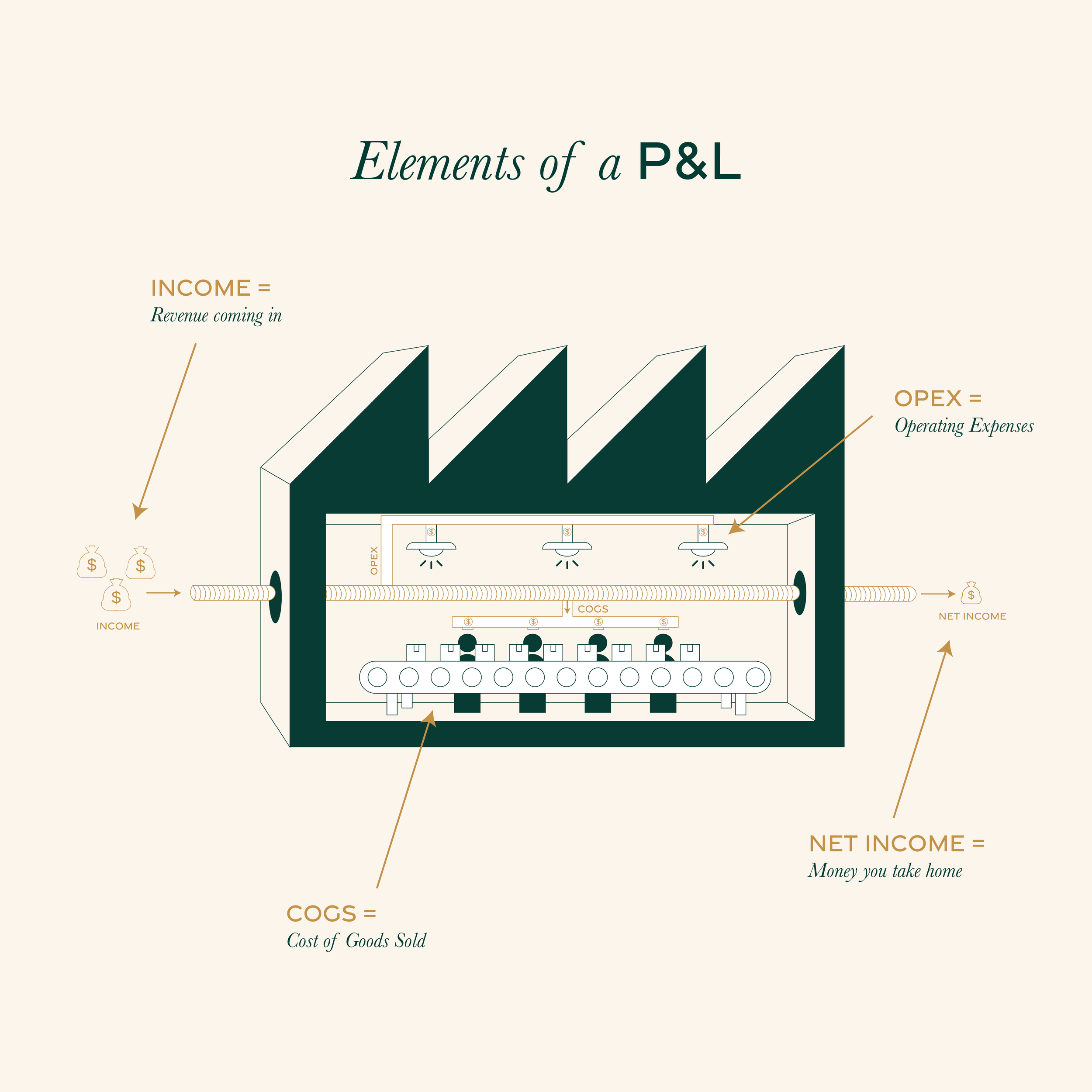
Understanding the time period of a P&L
A key part of understanding your P&L is knowing what it represents. A P&L covers a period of time—like a month, quarter, or year—showing how your business performed over that stretch.
This is different from a balance sheet, which is a snapshot of your business at one moment.
Think of it this way: your P&L shows how you performed, while your balance sheet shows where you stand.
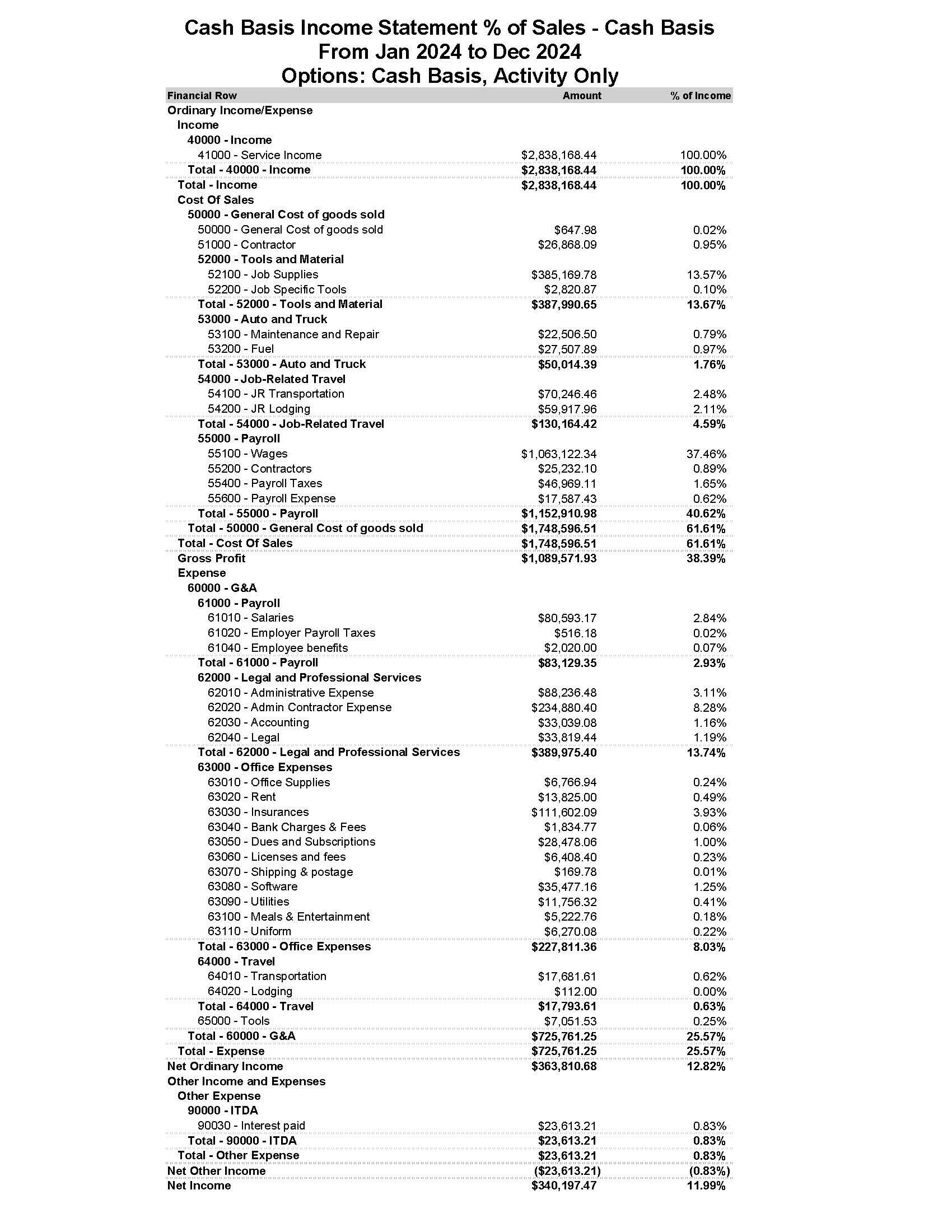
Accrual vs. Cash Accounting
Your P&L focuses on profit—but profit alone doesn’t tell the full story. Profit is the money left after expenses, showing whether your business is working over time. Cash, on the other hand, is the money you actually have on hand to run your business day to day.
A company can be profitable on paper but still struggle if cash isn’t available when needed. That’s why both matter—profit reveals long-term potential, while cash determines your ability to operate right now.

Profit vs. Cash
Ever wonder what the difference between accrual and cash accounting is?
Accrual and cash accounting differ primarily in when income and expenses are recorded. Cash accounting records transactions only when money actually moves, giving you a clear picture of your current cash position and how well you’re managing day-to-day operations. Accrual accounting records income when it’s earned (invoicing or A/R) and expenses when they’re incurred (billing or A/P), regardless of cash movement, providing a more accurate view of true business performance and profitability over time.
In that sense, accrual tells you if you have a good business model, while cash tells you how well you’re implementing it, which is why a P&L can tell very different stories depending on which method is used.

P&L Statements With EvolvCFO
A profit and loss statement is only as valuable as the accuracy of the information behind it. Common mistakes include missing expenses, categorizing transactions incorrectly, or failing to record all sources of revenue. To avoid these issues, regularly reconcile your bank and credit card accounts, review your income and expense categories, and ensure every transaction is recorded in the correct accounting period. Taking the time to verify your financial data each month will provide a much clearer picture of your business's true profitability and help you identify trends before they become larger problems.
When used correctly, a profit and loss statement becomes more than just a report, it’s a decision-making tool that helps business owners evaluate performance, improve profitability, and make confident decisions that support long-term growth!
Stop managing your P&L Statements without financial structure.
Take complete control with your P&L that will actually help you be consistent.