

BALANCE SHEET
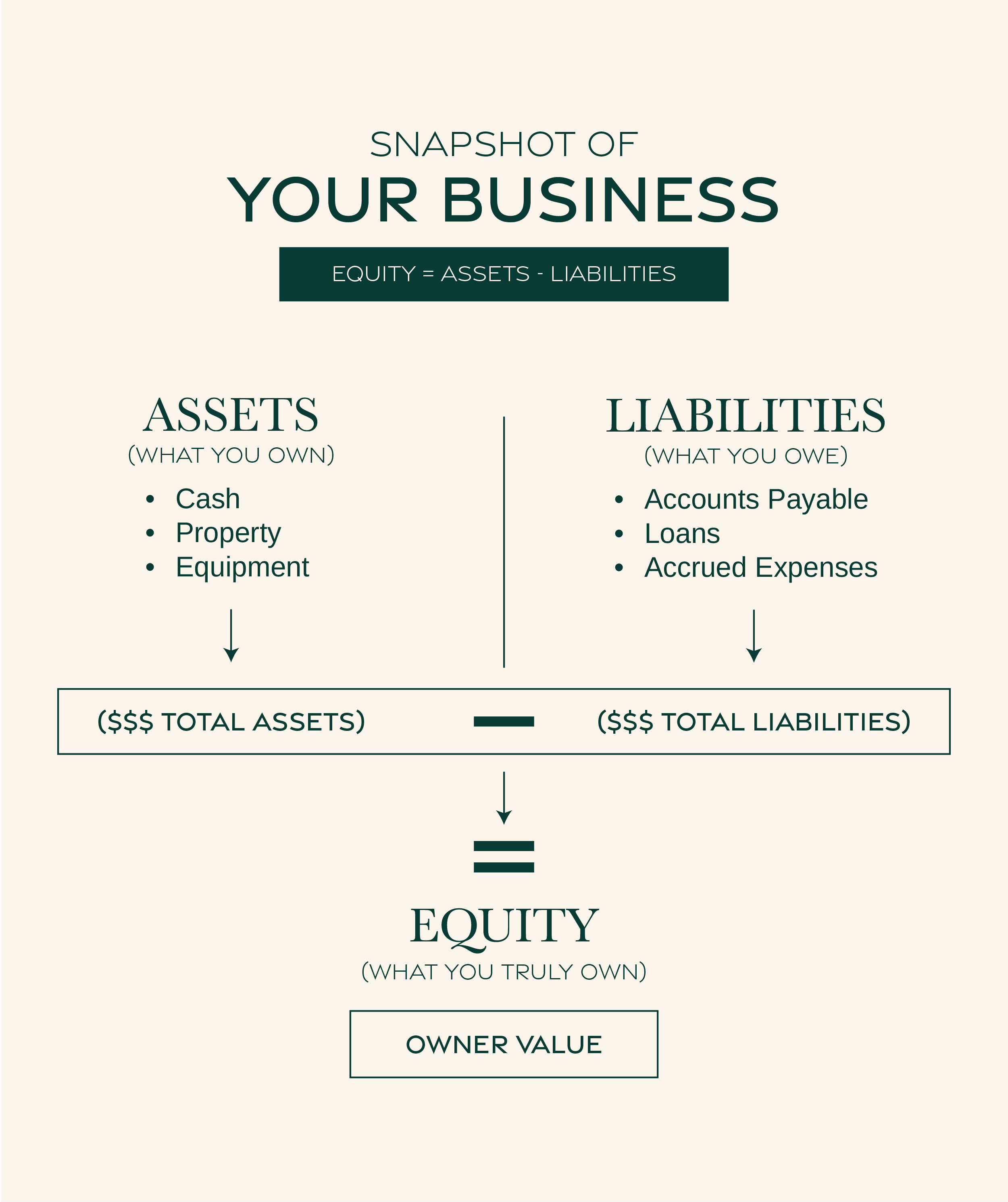
A balance sheet is a financial statement that shows a company’s financial position at a specific point in time; what it owns (assets), what it owes (liabilities), and what’s left over for the owner (equity). It provides a clear snapshot of the overall health of a business.
Why Balance Sheets Matter
Balance sheets helps measure financial stability and how much a business relies on debt. It gives insight into whether the company is on solid footing or taking on more risk than it can comfortably manage.

Main Balance Sheet Components
At its core, the balance sheet is built from three main components.
First are assets, everything the business owns or controls that has value. Some assets are short-term and can be converted into cash within a year, while others are longer-term investments that provide value over time. Common examples include:
Cash & cash equivalents
Accounts receivable
Inventory
Prepaid expenses
Property & real estate
Equipment & machinery
Vehicles
Furniture & fixtures
Accounts payable
Short-term loans
Accrued expenses
Mortgages
Equipment loans
Long-term notes payable
Next are liabilities, which represent everything the business owes. Some of these obligations are due within the next 12 months, while others extend beyond a year. Typical liabilities include:
What remains after subtracting liabilities from assets is equity, the true value of the owner’s stake in the business. A healthy company typically shows growing equity over time, reflecting that it is building value rather than simply taking on debt.
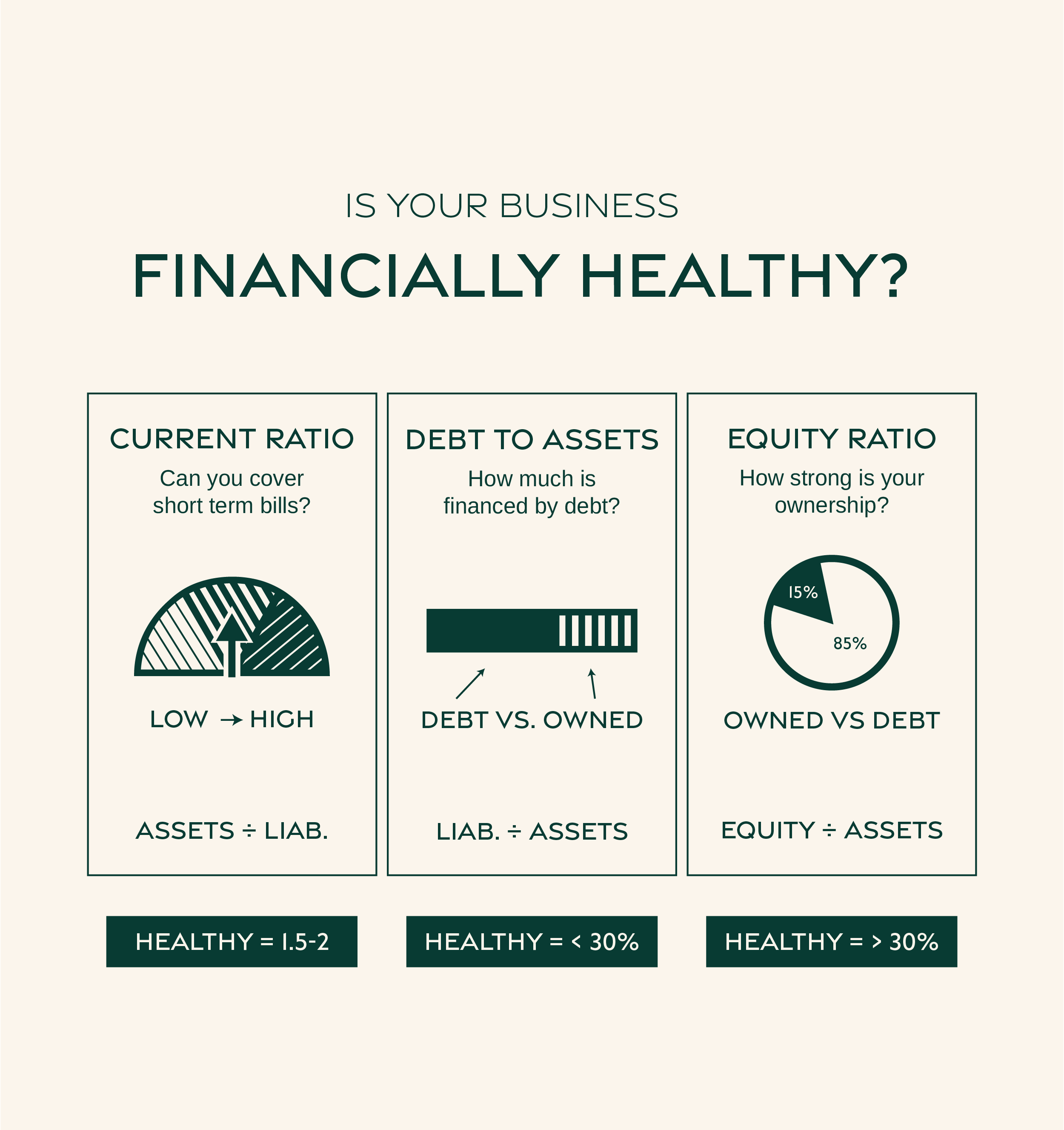
Beyond understanding what’s on the balance sheet, there are a few key ratios that help interpret it:
Current ratio: Measures short-term liquidity and whether the business can cover its immediate obligations (Current Assets ÷ Current Liabilities)
Debt-to-assets: Shows how much of the business is financed by debt, with lower ratios generally indicating less financial risk (Total Liabilities ÷ Total Assets)
Equity ratio: Indicates overall financial strength, with higher ratios suggesting less reliance on borrowed funds (Equity ÷ Total Assets)
Balance Sheets with EvolvCFO
It’s also important to note that balance sheets are only as useful as they are accurate. Common mistakes include undervaluing or inaccurately reporting assets and missing liabilities. To avoid these mistakes, it’s important to regularly review and verify the accuracy of your financial data. Make sure assets are recorded at realistic, up-to-date values by reconciling them with documentation like bank statements, invoices, and inventory counts. At the same time, be diligent about capturing all liabilities—especially smaller or less obvious ones like accrued expenses or outstanding bills. Consistently updating your balance sheet and double-checking it against other financial reports can help ensure nothing is overlooked and that your numbers reflect a true picture of your business.
When used correctly, a balance sheet becomes more than just a report—it’s a decision-making tool that helps business owners understand where they stand today and how prepared they are for what comes next.
Stop managing your balance sheets without financial structure.
Take complete control with your balance sheets that will actually help you be consistent.